“John, you’d better get up!”
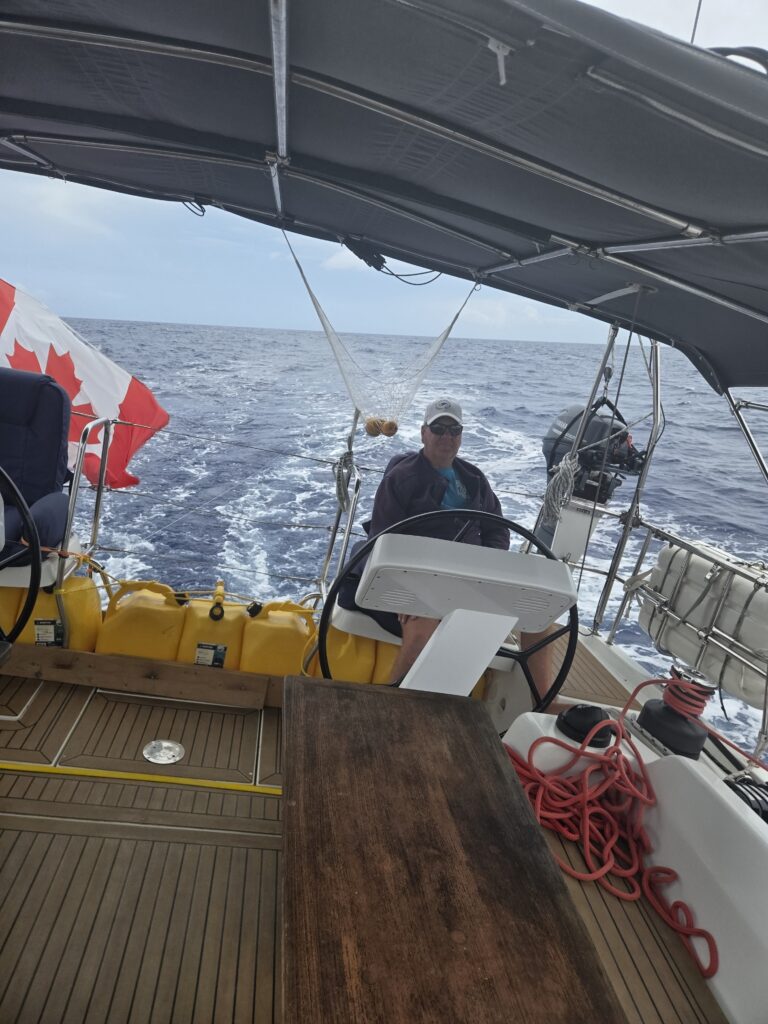
It was Mike rousing me from slumber in his usual calm manner. This had to be serious… I had just fallen asleep. I glanced at my watch. 2 a.m. My shift on deck had finished an hour ago. The forward cabin where I slept was the worst spot on the boat, bouncing up and down as the 51-foot sailboat ricocheted through the massive waves. When I crawled into my bunk exhausted, I thought we had escaped the worst of the lightning, having dodged between the thunderheads rolling in from the east all day.
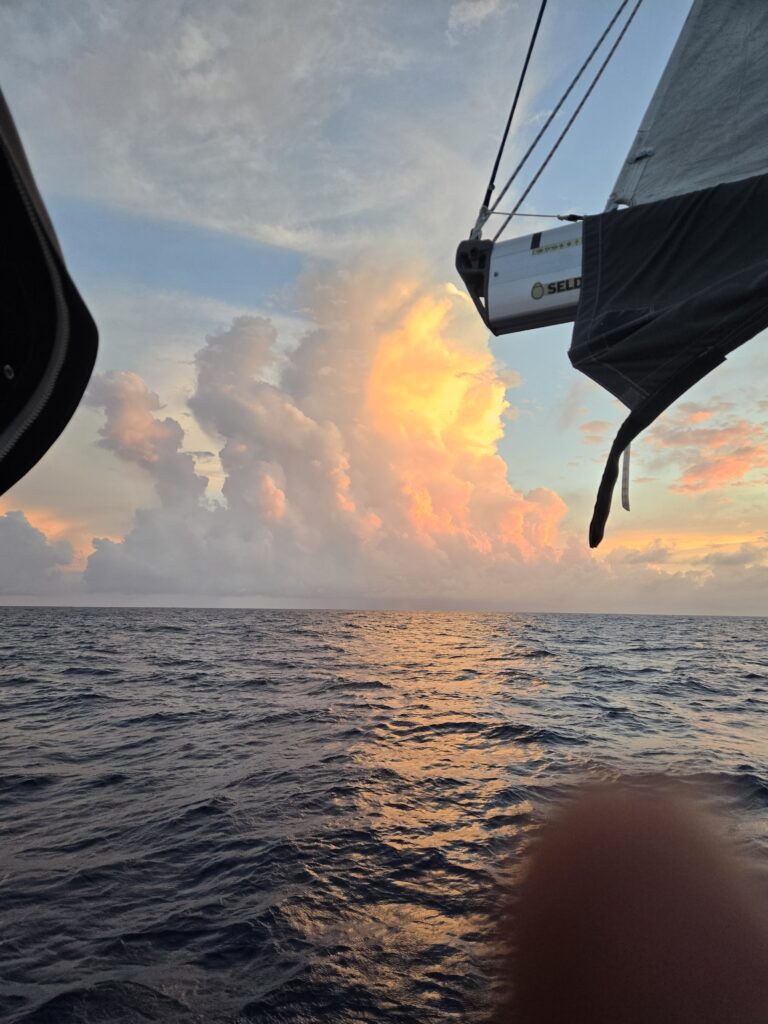
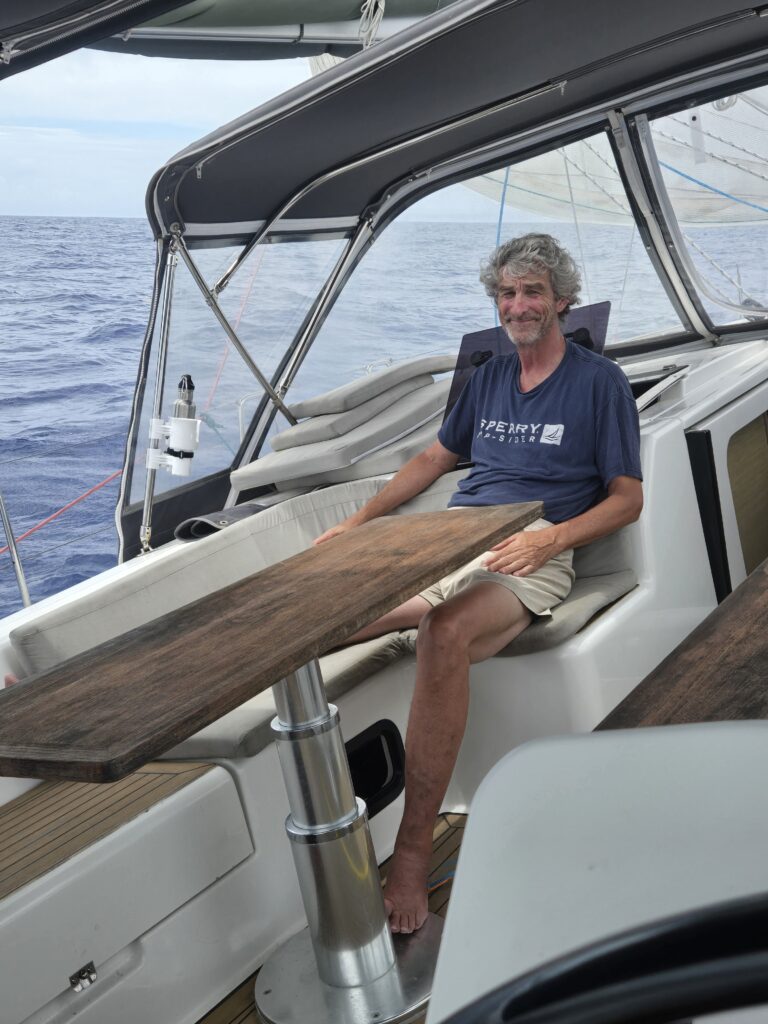
Then the sun set. Pitch black. Moonless sky. The sky was lit up with distant lightning, followed a few seconds later, loud thunder that rattled through the rigging. For my entire shift, the steady 12-knot easterly trade wind drove us toward our destination of New York City. We sailed away from the thunderheads… or so I thought.
When I handed over the helm to Ihor at 1 a.m., the winds had slackened; we were moving at a slow pace of 4 knots. “You’ll probably have to start the engine,” I said, not appreciating the significance that this could represent the calm before the storm. The radar showed we were on a collision course with a squall five miles ahead. Given our luck in avoiding the storms earlier in the day, I was confident this would pass in front of us. As I crawled into bed, I heard Ihor start the engine. I passed out in seconds from the calming vibrations of the engine.
“We’ve lost the wind instrument readings,” said Mike as he woke me up. “And the engine won’t turn off.” Mike was standing in my cabin, dripping wet, having been in the deluge of rain pelting down from the heavens.
I got up and put on my foul-weather gear and life jacket. The wind had heeled the boat over at an alarming angle. Once in the cockpit, the pelting rain soaked me coming at right angles, causing pain as it dented my face. I glanced up at the mainsail and focused my headlight. Ihor and Mike had successfully put in the third reef when the storm hit. The mainsail was down to less than half its original size by pulling the bottom of the sail onto the boom.
I glanced at the engine’s throttle and pushed it forward. The engine’s forward gear would not engage. It kept on humming at low revs. We are 600 miles offshore and have no engine power! This could mean major trouble.
“The last wind reading I saw was 26 knots,” said Mike. “Then it stopped reading. I cannot see the wind instruments at the top of the mast, but it is dark up there. The antenna for the VHF radio is hanging by the electrical wire. The attachment to the mast is gone. Maybe the same thing happened to the wind instruments?”
Two significant problems on the pitch-black stormy night. “Were we hit by lightning?” I asked.
Never having had the experience of a lightning strike during their action-packed lives, Ihor and Mike shrugged their shoulders.
“Let’s check the engine,” said Ihor.
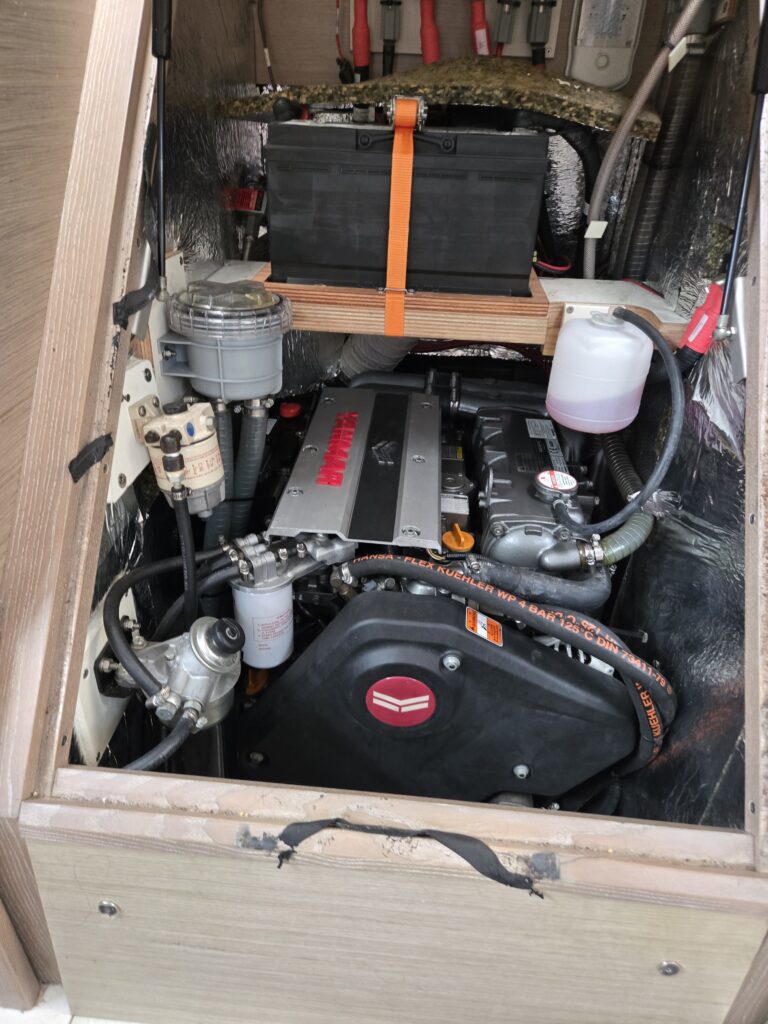
I led Ihor to the engine. I opened the stairs revealing the humming engine underneath. Ihor shone his light onto the engine. He pumped the hand pump. The engine stopped. What the f…?
“Start the engine,” Ihor shouted to Mike through the roaring wind.
Mike started the engine. He put it into gear. I could feel the lift the engine gave to our forward motion. He turned the engine off. One problem solved. We’d worry about the explanation later. For me, it was obvious. Things happen in life that defy explanation… especially at sea. When things work out, I just accept it and move on.
“Let me check the connection of the wind instruments to the mast,” I said. This part was simple for me because I was the one who connected them six months ago… and likely didn’t quite do it right…
I went into my room and pulled off the ceiling tile. A rat’s nest of wires appeared. “It’s the black wire,” I said. “Let’s fiddle with it.” I grabbed the wire and yanked it.
“Instruments are working!” shouted Mike from the helm. Ah ha! I knew it. I shoved the wires back into the ceiling.
“Instruments not working now!” shouted Mike.
I glanced at Ihor. Clearly, this was a job for someone who actually knew what they were doing. Ihor took apart the connection and carefully reconnected the wires.
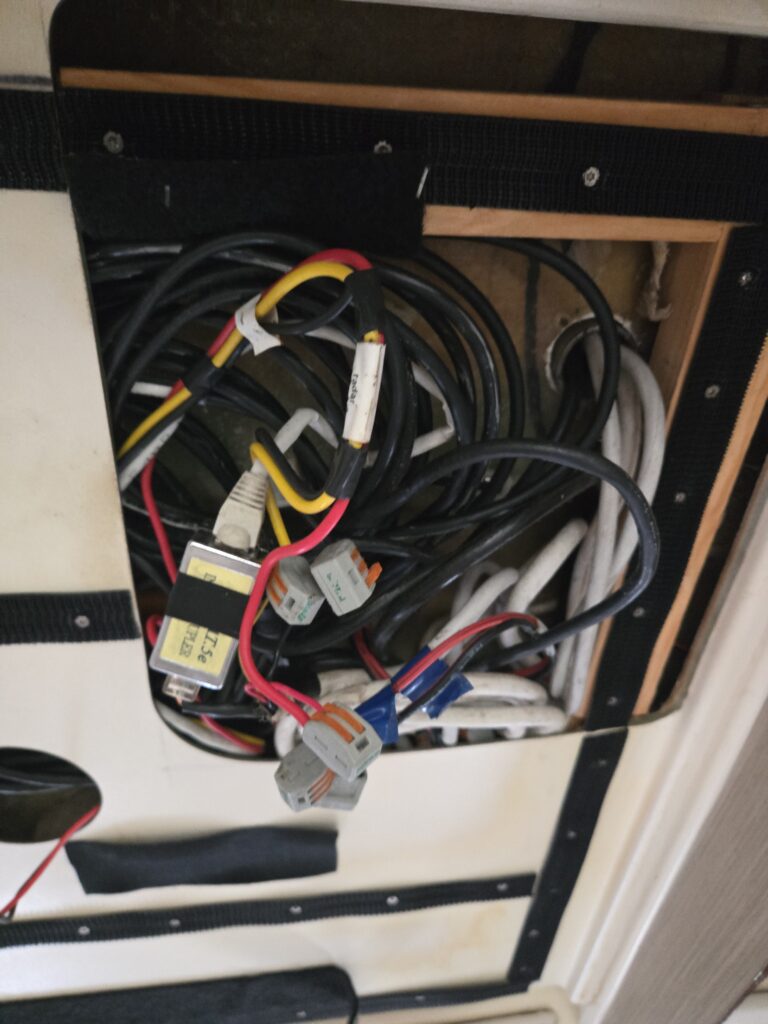
“Instruments working,” shouted Mike. With the problems solved, we looked at each other in the lightning’s light that lit up the sky from our stern. I saw confusion and disbelief in Mike’s and Ihor’s faces as the radar screen showed no more squall activity in front of the boat. The electrical activity in the atmosphere was behind us. We had survived the storm.
“Let’s get the f… out of here,” shouted Ihor as he started the engine and pushed the throttle in gear. The wind had died down to 6 knots, not enough to power the boat forward. It was a relief to get away from the powerful thunder and lightning storm that had battered us for the past two hours. I’m not sure Ihor’s swearing was part of Ihor’s vocabulary before he signed up for this trip from the Dominican Republic to New York, but that’s what we sailors do to cope with tackling problems we encounter at sea.
Especially those problems that defy a simple explanation…