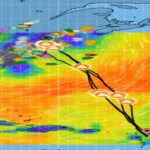
I had just come out of the Department of Surgery meeting. It was 5:45 PM. I was ready to go home. I am currently chief of surgery at a community hospital in Toronto, and the meeting had just wrapped up. The familiar ring of my cell phone went off. I glanced down at the caller ID. It was Pat Sturgeon.
“There is a rescue going on off the coast of Nova Scotia,” he said. “Do you think it’s your boat?” I stopped dead in my tracks as my heart dropped. This kind of news was my worst nightmare.
The story began about six months earlier. There was no wind on Lake Ontario, and my 35-foot C&C sailboat was bobbing around in no wind. The bright sun was burning the top of my head in the mid-afternoon with a temperature was 30°C. The Wind Finder app on my phone was predicting no wind for the next 24 hours. There was no way that the boat was going to finish the Lake Ontario 300 sailing race before my self-imposed curfew of Wednesday morning. I had a full list of operating booked, and I had to be back to work. The boat was 60 miles from the finish line. After three gruelling days and sleepless nights, I abandoned the race. I started the engine and headed back to the club.
The boat was on autopilot, and the lake was as smooth as glass as I motored west. Not a ripple disturbed the smooth water. This ride home was going to take 10 hours. As I lay back on the cushions in the cockpit, I had plenty of time to reflect. I am 62 years old. When life’s turns and twists had me in a demoralizing spiral, my dream of spending the winters in the Caribbean always improved my attitude. I imagined myself on a 50-foot boat outfitted to go off the grid for months at a time. I calculated I had between 3-5 years left to work before I would have enough money saved up to do this. The chief obstacle in the plan was having a sailboat that could meet the needs of both me and Ileana. I quietly drifted off to sleep. I saw myself on the deck of a beautiful boat anchored in turquoise water with the outline of coconut trees on an island that was close by. When I woke up, I knew what I had to do. I needed to get the boat so I would have 3-4 years to get used to it and prepare for the trip south.
Pat Sturgeon of Pat Sturgeon Yacht Brokers met with me. We spent about an hour discussing what I was looking for in a boat. We made a plan. While flipping through the pages of used boats on the Internet, Ileana, my wife, pointed out the boat she wanted, and I agreed. Makena was a beauty. The boat was in immaculate condition since the previous owner had maintained it very well and hardly used it. She had everything that you would need to live comfortably at anchor for months at a time. There were freezers, fridges, hot and cold running water for showers, a washing machine, solar panels, a generator, and the list goes on.
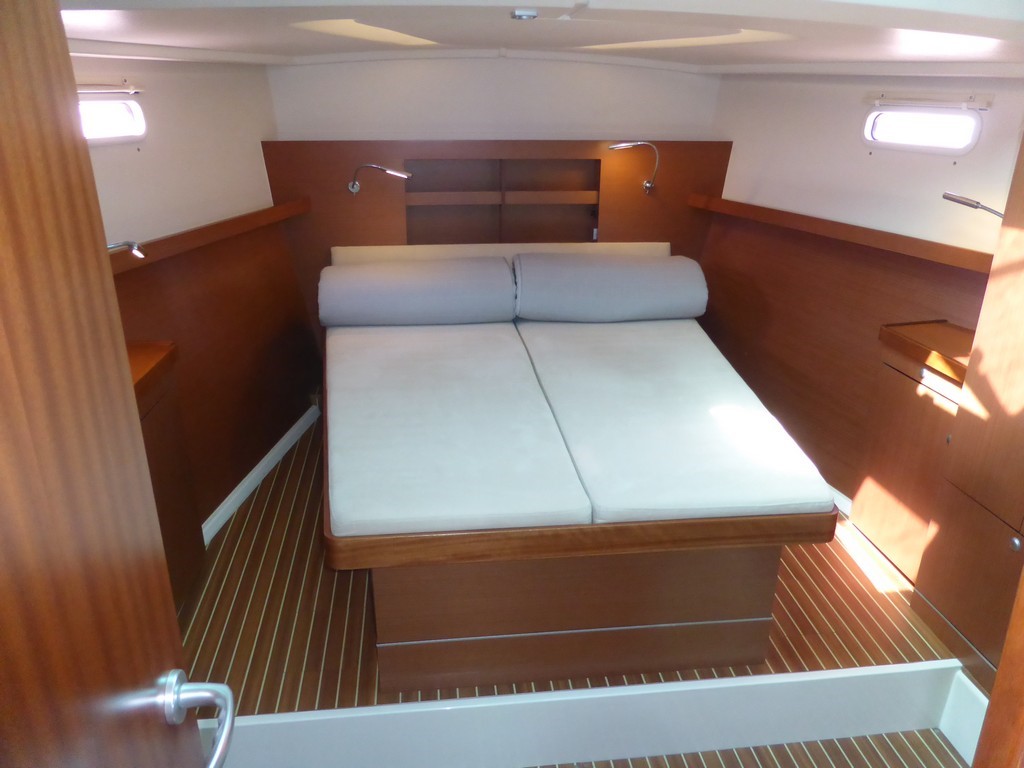
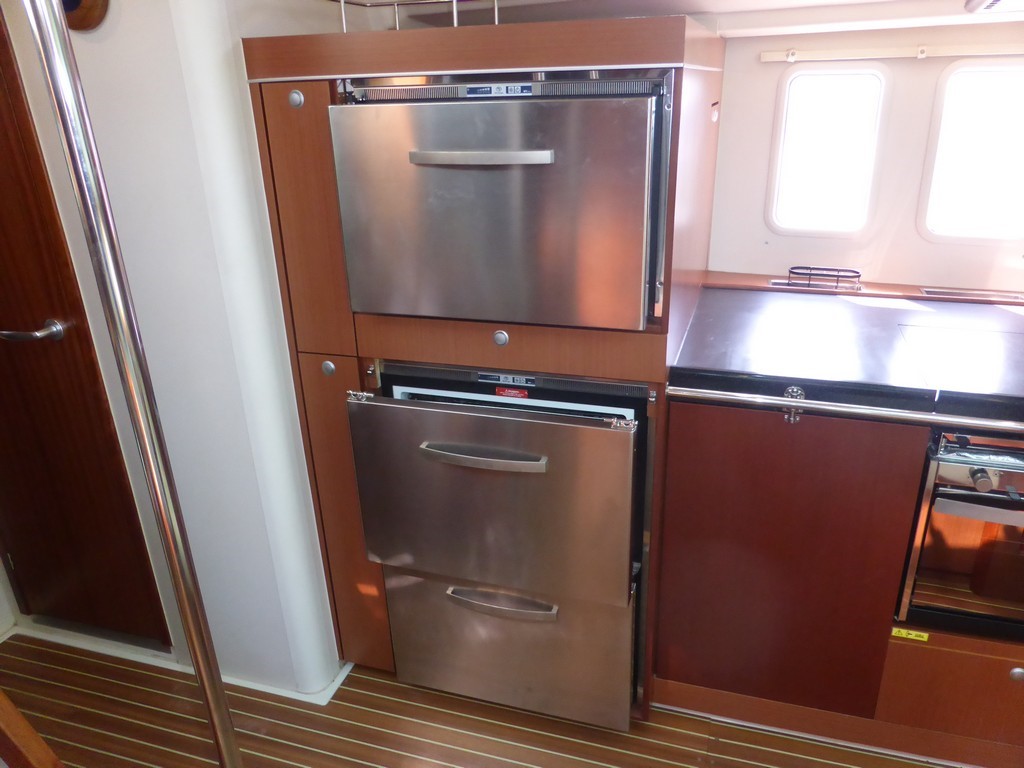
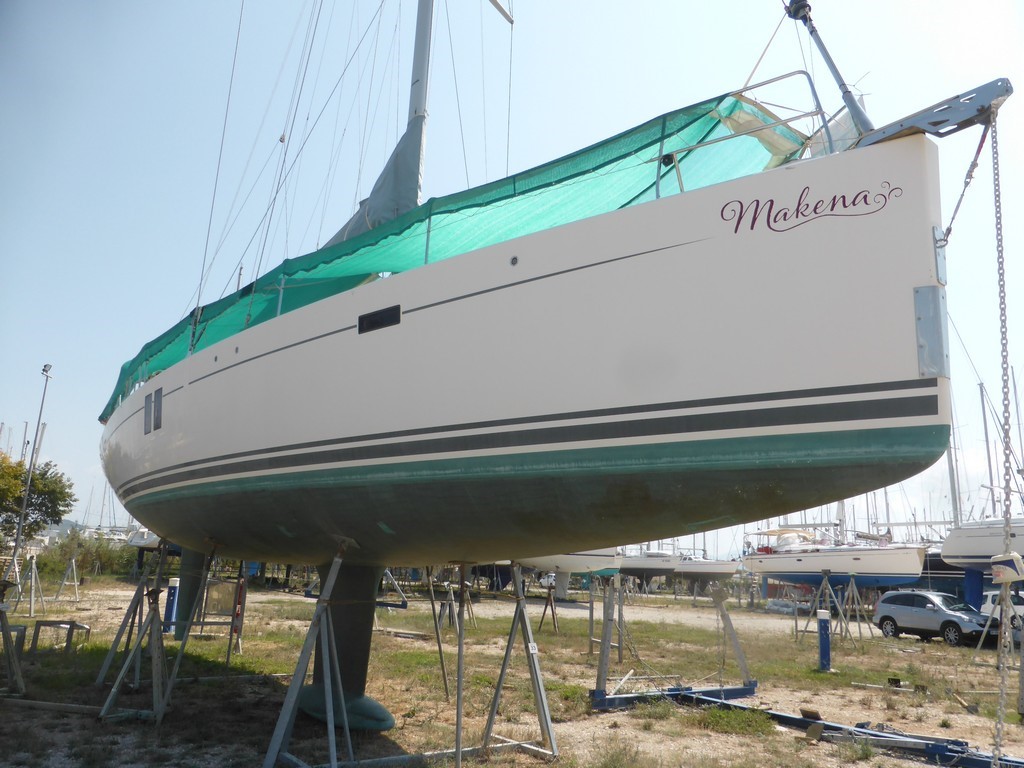
The Hanse 495 was ‘on the hard’ in Greece. I made an offer. They completed a marine survey. I completed the purchase. Once in motion, everything seemed to happen so quickly. It surprised me that there were no questions asked by the bank when I dipped into my line of credit so deeply. Pat Sturgeon put me in touch with a marine insurance broker. Within several days, for a substantial fee, Lloyd’s of London came to the rescue.
We looked at the option of having the boat sailed across by a delivery skipper. We came across Rupert. Rupert has done over 150 deliveries all over the world. He has sailed up the St. Lawrence Seaway three times and had been to the Panama Canal, across the Atlantic, across the Pacific, and had come highly recommended. They knew him well in the industry as a dependable, reliable delivery skipper. I contacted Rupert, and he agreed to do the job. He flew to Greece and spent a week making certain that the boat was up to sailing across the North Atlantic after the hurricane season in the fall. He commented the boat was immaculate. They hardly used the boat, which was designed specifically for this type of crossing. It was a beautiful boat, and he could find no flaws. Rupert had his bag of tools and explained that he could handle almost any failure. He had sailed in more dangerous waters with less seaworthy boats frequently. He knew he could sail the 5000 nautical miles and deliver the boat to Toronto before the St. Lawrence Seaway closed on December 23, 2018. His fee was $200 a day, which included the two crew and a cook. He estimated it would take 39 days. He would need to stop for fuel and supplies in Gibraltar, the Azores, Port Hawkesbury in Nova Scotia, and then Toronto. The boat had an AIS tracking system, and he had a satellite phone and would communicate with me.
Rupert set off from Greece on Saturday, October 13, 2018, on a beautiful sunny day with 10 knots of wind.
A week later, Rupert arrived in Gibraltar. The weather had taken a turn for the worse. He had to spend several days in Gibraltar waiting for a weather window to sail to the Azores. The boat had behaved beautifully during this first crossing of over a thousand nautical miles. Rupert explained to me that there was no doubt the boat was up to traversing the North Atlantic at this time a year. On Sunday, October 28, Rupert planned to set off for the Azores. His plan was to head south of the rhumb line and then head north when the weather allowed. Unfortunately, Hurricane Oscar was pummelling the United Kingdom. High winds and enormous seas were disturbing the ocean, making it impossible to leave the Azores until Wednesday, November 2.
Rupert set sail and enthusiastically headed south in beautiful conditions. The sun shone, and the wind was 15 knots from the north for a perfect beam reach. After two days, Rupert started the engine to recharge the batteries. A loud thumping noise from the hull made the entire boat vibrate. Glancing behind, Rupert saw a line of fishing buoys being pulled along. He knew immediately they had rope wrapped around the propeller. The seas were rough with enormous waves, with no hope of safely freeing the line in the open ocean. With a heavy heart, he limped the boat back to harbour in the Azores.
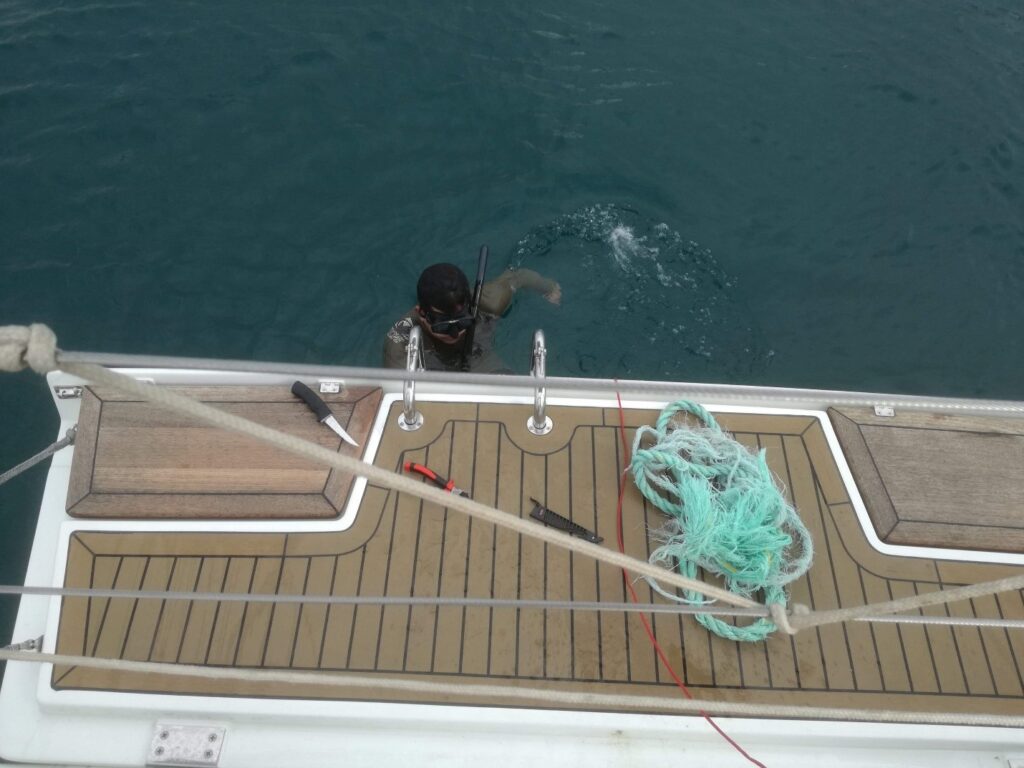
On Monday, November 19, Rupert set off again for Nova Scotia. His plan was to go south and dodge any weather systems that were rolling through the North Atlantic at this time of year. As it was November, the hurricane season had passed, but there would be winter storms.
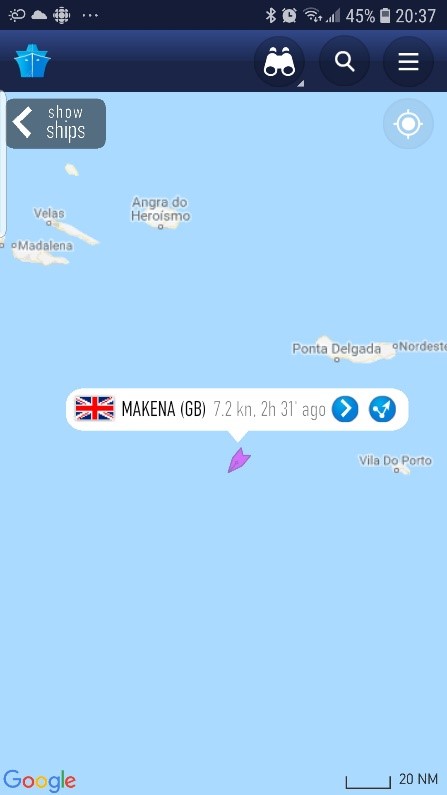
The weather predictions were four hours old and felt to be very accurate. However, despite taking all the precautions and calculations, Rupert found himself at the wrong end of the hurricane…..
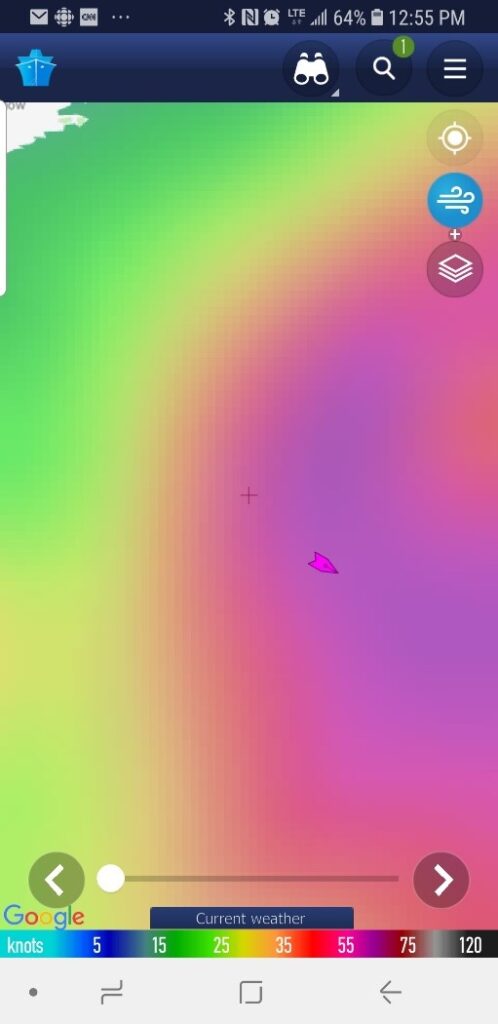
They lashed the tiller to the side, so the boat was rolling safely with the waves. A huge, deafening roar from the waves rattled the entire hull. The wind tore through the rigging, adding to the cacophony. Lisa, the cook, was in the forward cabin cushioning herself with sleeping bags and terrified. Rupert and the crew were hanging on in the main salon, trying to avoid getting battered, waiting for the winds to blow through. This lasted about 24 hours. The winds reached a peak of 73 knots. After the wind settled down to a dull roar of 35 knots, Rupert went out to assess the damage.
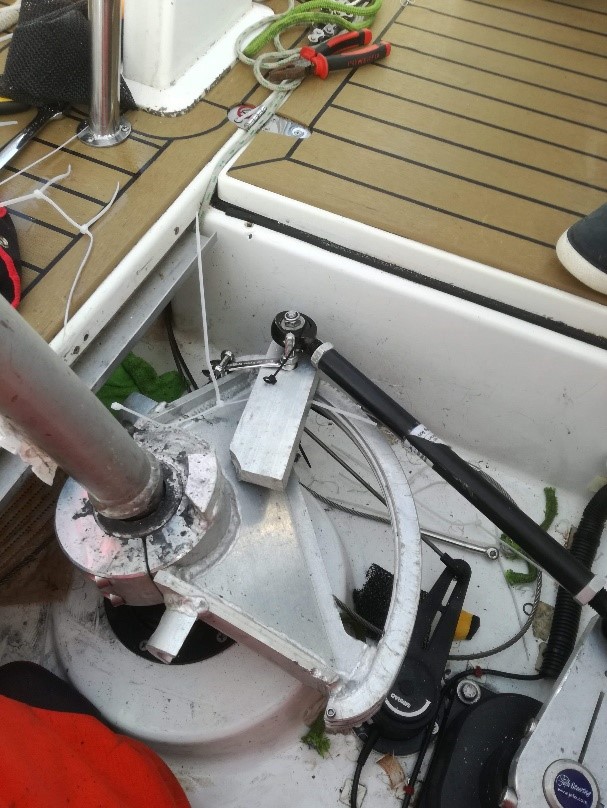
There was buckling of the floor of the cockpit. It was apparent that the rudder had rotated 180°. The steering cable had snapped. I received a text message from Rupert updating me that there was a problem with the steering.
Rupert cobbled the steering back together again using a combination of spanners and wrenches. He took the steering mechanism off and turned it upside down so that it would function. After two hours, the boat was up and running again.
Rupert was heading directly for Halifax, 500 miles to the west. The steering system was working very well. There was going to be a direct run to the coast of Nova Scotia. Rupert received constant updates about the weather from the satellite phone. There was a low-pressure system, and though they expected winds, it would come from the northeast, but the maximum winds would be 35 kn.
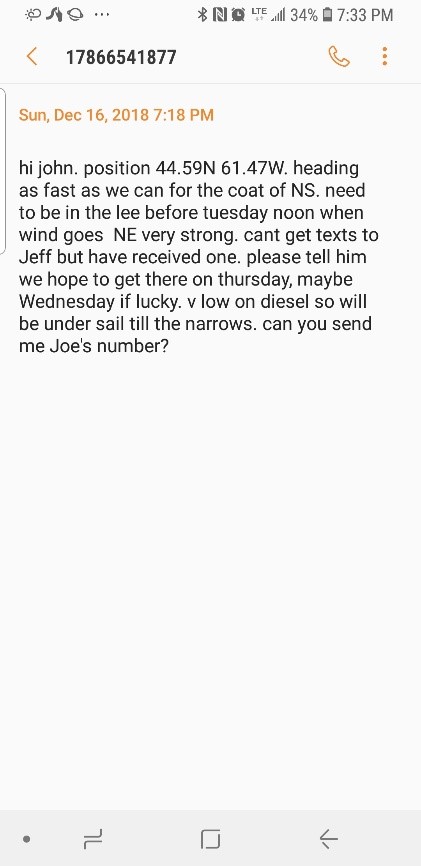
One day later, on December 17, at 5:45 PM after my Department of Surgery meeting, I received the first phone call from Pat Sturgeon. I explained the boat had an emergency beacon, EPIRB, that would activate in case of an emergency. My cell phone number was the contact number, and they had not contacted me, so this could not possibly be my boat that was getting rescued. The second phone call five minutes later from Pat confirmed I was wrong. The boat in distress in the North Atlantic was actually mine, but the rescue team successfully saved all four sailors on board. They abandoned the boat.
My first reaction was disbelief, and then shock. I was at my desk in the hospital when the news hit me. Although I always knew there was a risk with sailing, I believed my boat would make it safely to Toronto. Rupert was 240 miles off Halifax and had been at sea for 34 days. He would have been safe in the harbour two days later. I wept. Six months of dreaming had ended with the boat being abandoned in the unforgiving North Atlantic. I found solace because the disaster didn’t cause any injuries or fatalities. This reality has provided tremendous comfort. It has allowed me to put things into perspective. I felt empathy for the mental anguish that Rupert had been going through, having had to abandon the boat. It has allowed me to understand the terror that the crew and Lisa the cook went through. Once again, it reminded me of the tenuous attachment we all have to everyday living that I take for granted.
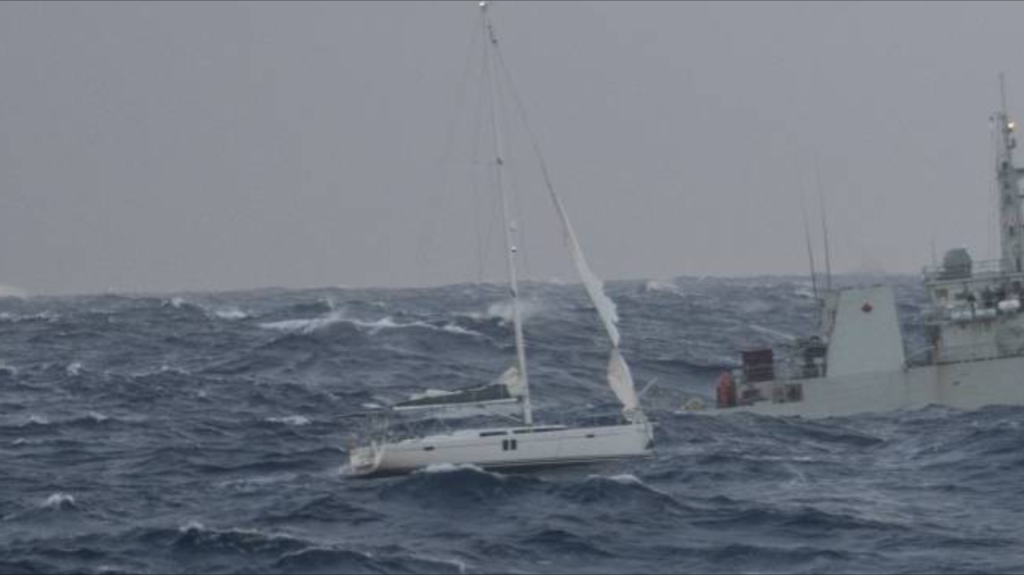
Rupert first contacted me five hours after the ordeal. It devastated him. He explained he had never lost a boat, and he felt so ashamed.
When the winds hit 55 knots, an enormous wave hit the boat . The autopilot shattered. There is a solid metal bar about three quarters of an inch thick and 4 inches long that snapped like a twig. They could not use the emergency tiller because the waves and the winds were so strong; it would have killed anybody who was handling it. There was no way to control the boat against the tempest and the enormous waves. They predicted the weather to worsen over the course of the night. They predicted the system to bring stronger winds and bigger waves over the next 24 hours.
There were two Canadian Navy boats that were nearby and were returning from naval exercises in Europe. Rupert had been in contact with them. At 2 PM, Rupert explained he was in trouble and had no steering. Rupert realized the crew were in danger and the only safe and rational option was to abandon ship.
The Navy ship could not launch its lifeboat because the waves and the wind were ferocious. They instructed Rupert to deploy the emergency life raft, get everyone safely inside, and then the navy ship could get them easily on the ship. When they deployed the life raft, it flipped upside down and they couldn’t right it. The securely lashed line from the life raft to the transom tore the transom from the stern of the boat as the force of the waves and wind strengthened. It left Rupert and the crew stranded on the disabled sailing vessel as the life raft flipped over and over, racing off with the storm. Their hopes of rescue went with it. It was then that the Navy ships helped coordinate the rescue helicopter.
They train the search and rescue team to do rescues in terrible weather. However, they described this as one of the most difficult rescues they have ever performed. The first step was to make sure that the crew were in immersion suits in case they went into the water. Often, it is safer to rescue sailors in the water to avoid getting the ropes and safety equipment wrapped up in the sailboat’s rigging. However, it was getting dark, and the team realized that if they lost someone in the rough seas, they would never find them in the dark. The first step was to get immersion suits onto the sailboat. They planned to pass the immersion suits onto the deck by throwing a rope from the Navy vessels to the sailboat. To do this, the Navy vessel had to get very close to the Makena. The Navy vessel drifted forcefully into my sailboat and broke the forestay and the pulpit. Only the jib halyard held the mast up, and the mast was reverberating back and forth, making a terrible racket. Rupert was worried that it would come crashing down, killing the crew. They all scampered into the aft cabin for safety.
Time was running out. The helicopter 240 miles from land was getting low on fuel. They had to act. The helicopter lowered a rescuer onto the deck of my boat. An enormous wave broke over the bow. It swept him into the ocean. Rupert watched helplessly. Hopelessness washed over him with a sickening feeling that this was all his fault. Suddenly, the line attached to the rescuer tightened, and the helicopter flipped him back on deck.
The process of getting off the boat was to put the sling underneath the arms and in seconds, they pulled the sailor into the helicopter. Lisa went first, the two crew next, then Rupert, and the rescuer last. When the rescuer arrived in the helicopter, blood covered him. He patted his chest and abdomen. When the search and rescue team asked if he had injured himself, he said he didn’t know what they were talking about. Fortunately, he had only some minor cuts and abrasions on his face from his altercation with the North Atlantic waves and was otherwise fine.
Rupert remembers looking down sadly from 500 feet in the air from the helicopter at the Makena. He remembers feeling defeated. Rupert has relived those last few hours on the Makena many times, trying to come to grips with whether he made the right decision by abandoning the boat. He goes over the damage to the steering to reflect on whether he could have fixed it. He relives the terror that the crew and Lisa were feeling and cannot come up with any other solution.
After spending the next few days in Halifax making travel arrangements, Rupert flew to Toronto and then on to Gatwick Airport in London. I met him for dinner in Toronto. He felt the Makena had likely sunk, but even if it gets recovered, it would be a write-off because of all the damage. In recounting the rescue story, we reflected on the Hanse sailboat design and whether it was a good boat. Rupert says that if it were not for the steering failure, the boat was a great boat. He described having a hot shower every night and having the freezer full of food and never worrying that it would fail. He says the boat sailed fast in light winds. When the hurricane hit, he felt safe lying ahull in the waves while the hurricane blew over. Rupert told me he felt he had let me down terribly by abandoning the boat. I explained I felt he had made the right decision and that ultimately, everybody was safe. I insured the boat for exactly this kind of disaster, and my plan was to purchase a new boat the same as the Makena. To deliver the boat to Toronto, I told him he would be my first phone call.
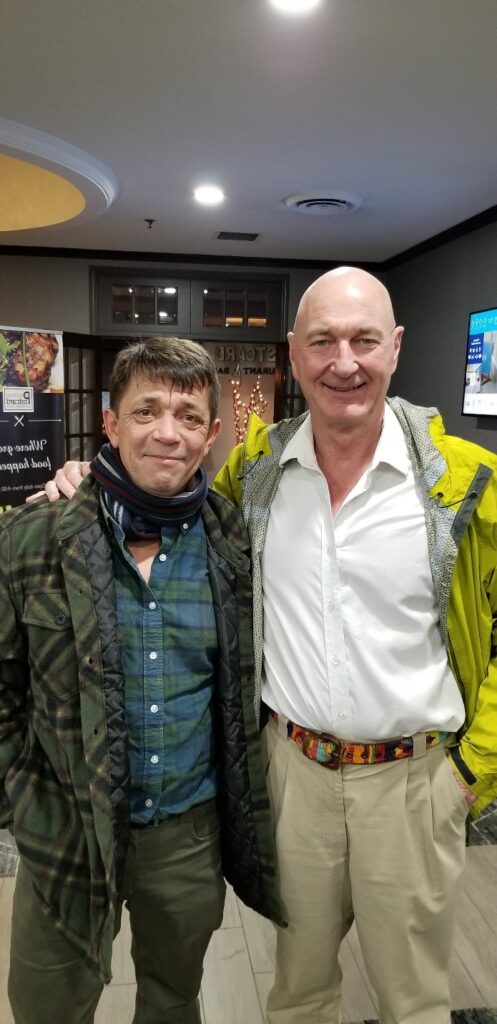
Rupert and John Hagen Toronto December 21, 2018