“I got an updated forecast from our weather router, Chris Parker,” I said.
The sun shining brightly, had us drinking our morning coffee in t-shirts, shorts, and bare feet in the cockpit. Our 1350-mile trip from Puerto Bahia Marina, in the Dominican Republic to New York City had us 600 miles offshore in a perfect fifteen-knot breeze from the east, the fastest point of sail in my 51-foot sailboat, Ileana. We had battled through powerful squalls, with lightning and thunder pummelling us for three hours a few nights ago. We survived. So we were feeling confident in our ability to handle anything the ocean was going to throw at us.
This forecast was different from the others we had been getting daily. “There is a stalled cold front in the north with a nor ‘easter barreling in.”
“A nor easter,” whispered Mike. “That will give us the most dangerous wind-against-current when we cross the Gulfstream. The towering breaking waves have split finer boats than this in half.”
“If we hustle, we might just get across the Gulfstream before it arrives,” I said. “Chris has given us some coordinates to aim for near Cape Hatteras.”
“Cape Hatteras,” said Ihor. “Isn’t that where all the shipwrecks happen?” Ihor was new to ocean crossings. He had sailed on Lake Ontario for the past six years, but wanted to experience an ocean passage to see if he liked it before getting a boat in the Caribbean to escape the harsh Canadian winters.
“He suggests we head for the Chesapeake for shelter until it passes,” I said.
“Seems like sensible advice,” said Ihor. “He knows what he is talking about.”
“He goes on to say, if you head to New York City, it will be very uncomfortable…,” I glanced at the email on my cellphone, “no, very, very uncomfortable.”
“He doesn’t say not to go,” said Mike. “We were in 35-knot winds last fall on the way south to Antigua and survived. This boat was made for ocean sailing. Besides, the prediction is for 25-knot winds. We can easily handle that.”
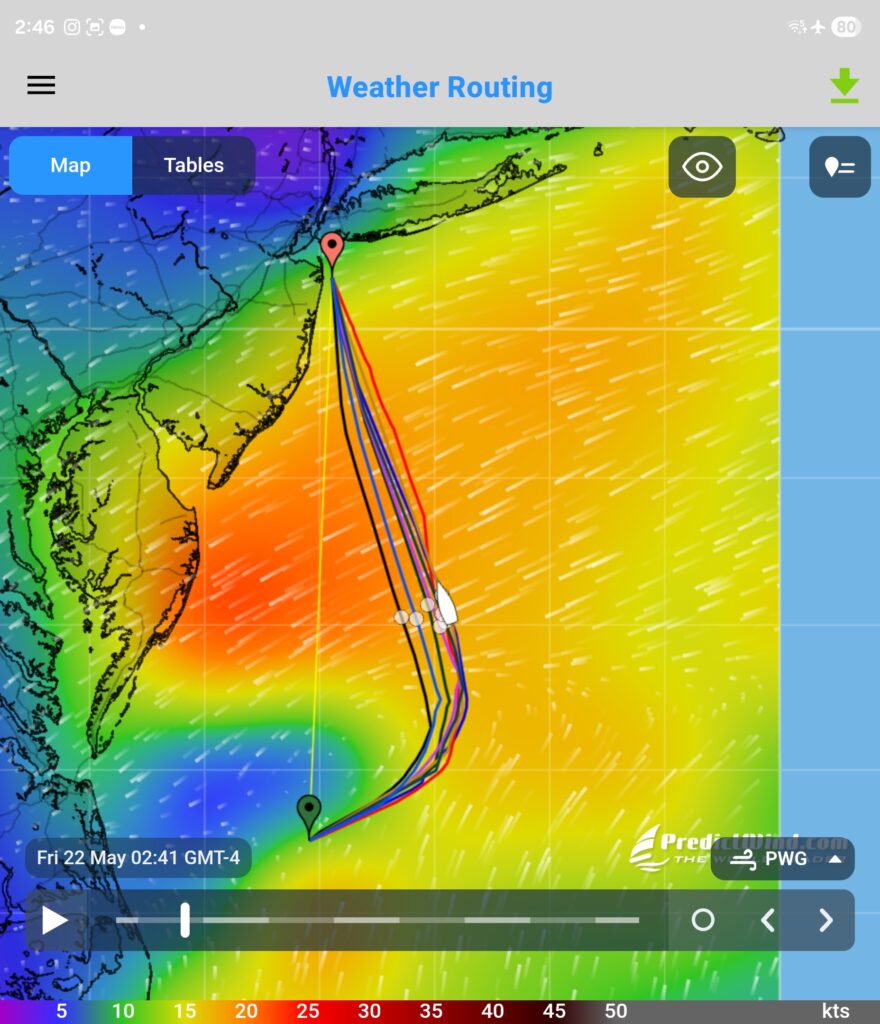
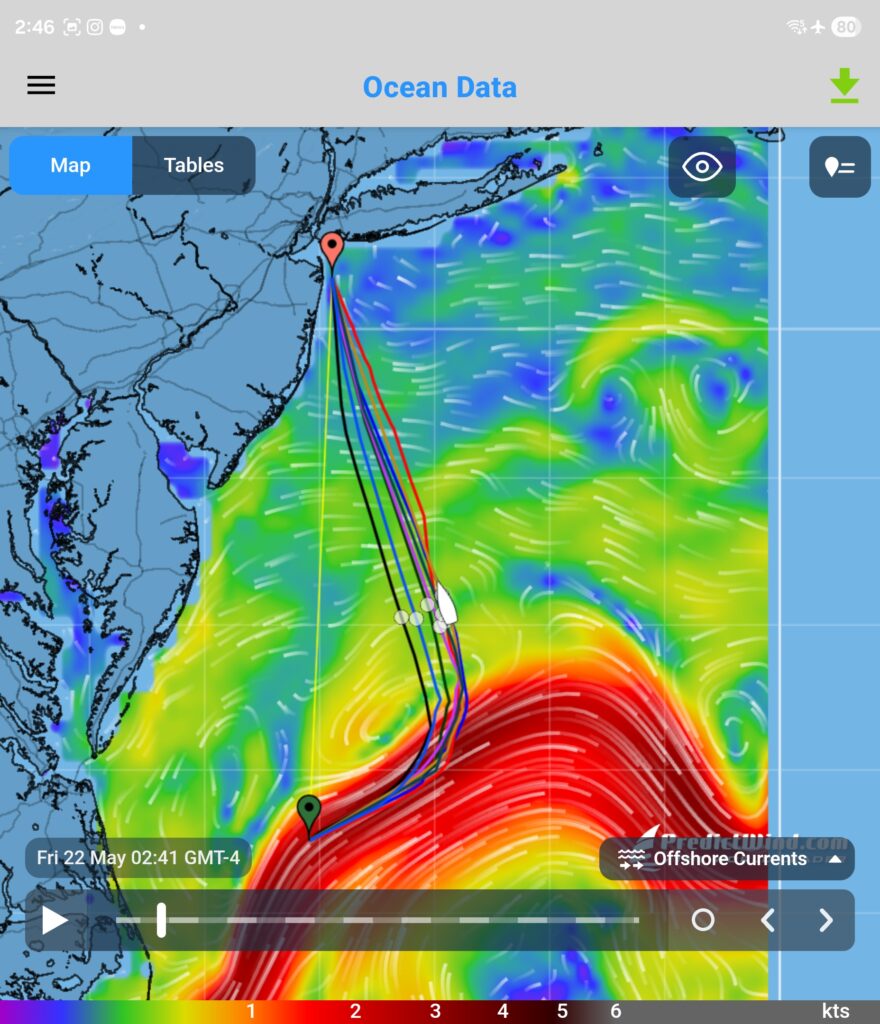
My Offshore App also predicted the same nor’easter in a few days. But we had time to cross the 50-mile Gulfstream current, which moved the warm Caribbean waters at five knots to the north, then veered toward the northeast after Cape Hatteras.
“Let’s decide after we cross the Gulfstream then,” suggested Ihor. “We have a few days. Things change rapidly out here.”
My mast was to be removed in Albany, on the Hudson River, on May 26 so I could navigate the Erie Canal to bring Ileana up to Lake Ontario. If we ducked into the Chesapeake to hunker down from the storm, I’d have to reschedule. Chris from Scarano Boatworks was bringing in special equipment to accommodate me. He explained it might be a few more weeks before they could squeeze me in if I rescheduled.
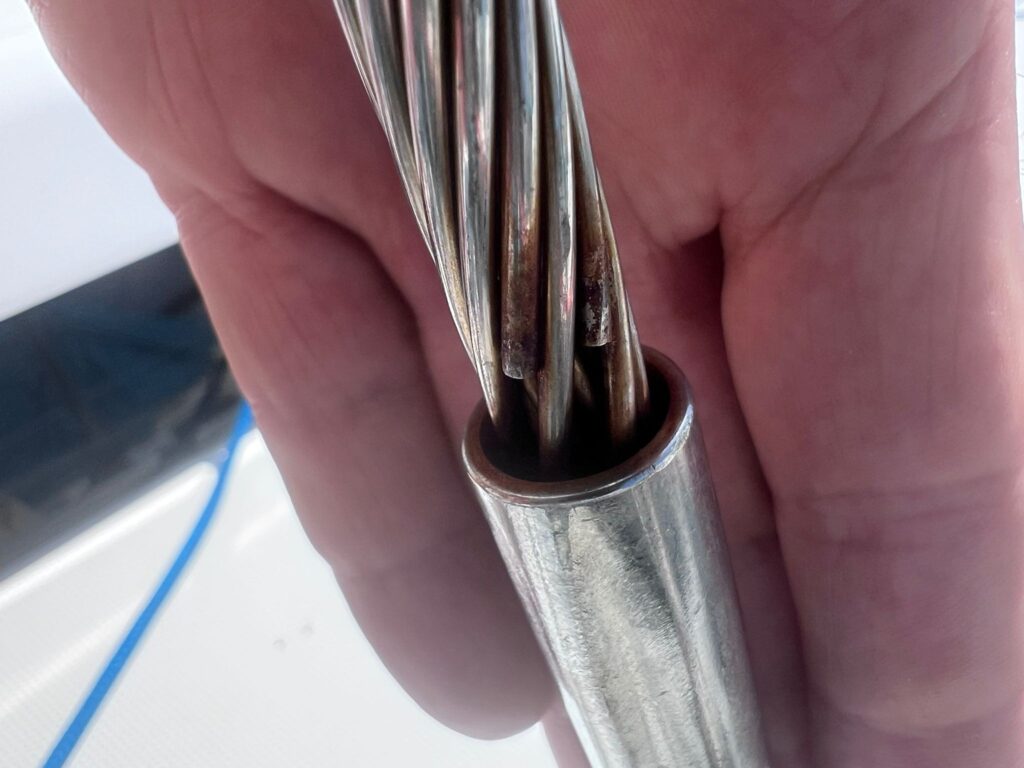
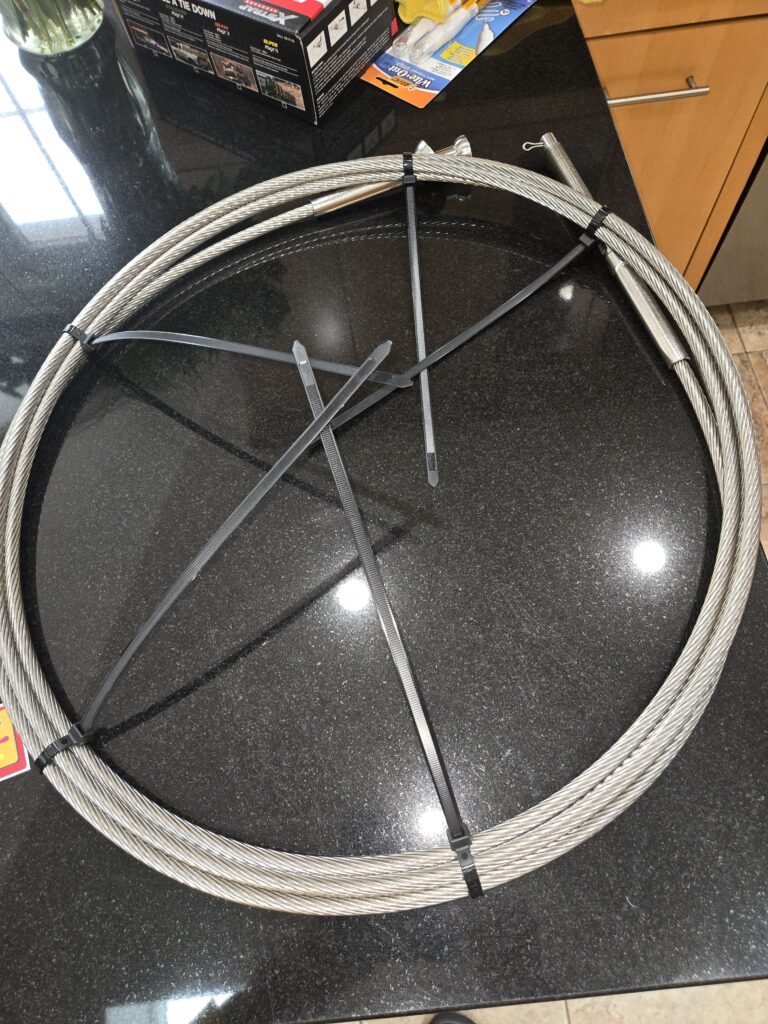
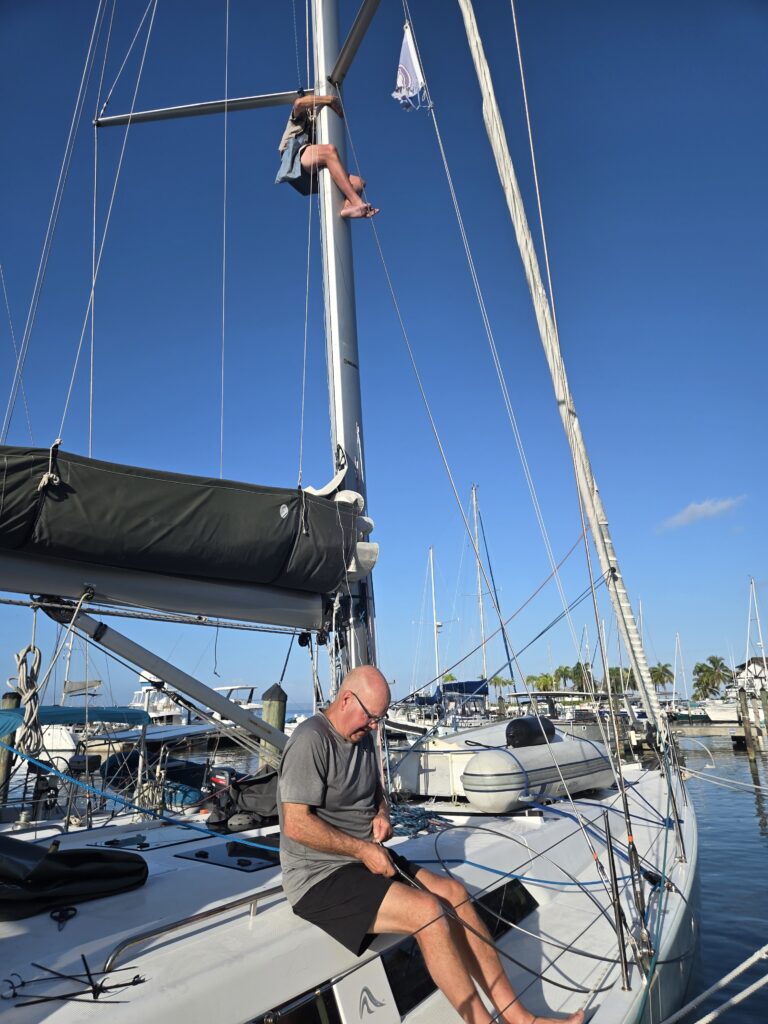
We had already delayed the trip because of a rigging failure discovered by Mike, who flew a few days ahead to the Dominican Republic. “There are two broken stands in the port lower shroud,” he said. “The other strands are at risk of breaking if we encounter rough weather on the trip north. The mast could come down when we are miles away from help. I say we get this fixed before we leave.”
I cancelled my flight to Samana and organized a new one to be built in Charleston, South Carolina. A few days later it was shipped to me. Five days later I turned up at the Puerto Bahia Marina carrying the new shroud as hand luggage. The following day, we had replaced it and were off.
My original plan would have given me time to hide from a storm. Now we were on a tight schedule. The wise mantra of “the most dangerous thing on a sailboat is a schedule” kept ringing through my mind. I needed to make sure this didn’t cloud my judgement in deciding whether to head for the safety of the shore, or into the gale.
I downloaded the latest updates from the Offshore App every twelve hours. It surprised me when it gave me the advice to head northeast in the Gulfstream after crossing at Hatteras for an extra 100 miles to the east before heading to New York City. This would put us at a favorable wind angle- almost a beam reach- when we ran into the nor’ easter.
“If we did this,” I said, “we would be over 200 miles from shore. We wouldn’t be able to duck into shore easily. What do you want to do?” I wanted to head into the gale. I didn’t want to miss the mast de-stepping and delay the trip further. This was definitely clouding my judgement…”
It was unanimous. We would head into the gale and rely on our sailing skills to keep us safe.
We had been on a fixed rotating schedule during the night. We each did three-hour shifts with someone always on deck. This way we could check for ships and adjust the sails for wind changes. On the six hours off shift, we would sleep. When all hell broke loose, like during the thunderstorm earlier in the trip, we were all on deck reefing the mainsail and adjusting the jib trim to keep the boat sailing.
When the nor’easter hit us, we were ready. With three reefs in the mainsail, the twenty-five-knot winds had us heeled over at a twenty-two degree angle. What I had not expected was the “high vertical acceleration’ warning that the Offshore App predicted with a pronounced exclamation mark.
I checked AI to find out what I had sailed into:
“Vertical acceleration while sailing means how quickly the boat moves up and down—usually because of waves. It’s a measure of the rate of change of vertical motion, not just how high the boat rises or falls. In practical terms, it’s what your body feels as “slamming,” “pounding,” or that elevator‑drop sensation when the bow comes off a wave.
What vertical acceleration actually represents
Vertical acceleration is driven mainly by heave (straight up‑and‑down motion) and pitch (bow up/bow down rotation). These are two of the six fundamental ship motions identified in naval architecture: surge, sway, heave, roll, pitch, and yaw .
Routing and performance tools like PredictWind explicitly calculate vertical acceleration as part of their wave‑polar output, alongside RMS roll and slamming incidence. They use it to estimate how uncomfortable or unsafe conditions may become for crew and gear .
Why vertical acceleration matters on a sailboat
Higher vertical acceleration means:
- More slamming loads on the hull, especially when the bow re-enters the water.
- More fatigue for crew—your body absorbs every acceleration spike.
- Reduced boat speed if the hull is being launched off waves instead of cutting through them.
- Increased risk of damage to rigging, bulkheads, and deck gear.”
I found out what “high vertical acceleration” meant while trying to sleep in the forward cabin. The waves would have me weightless moments before crashing down. An eardrum-shattering slam would reverberate through the hull, violently shaking the boat. When I got up to pee. It was as if a giant hand had picked me up and pitched me against the ceiling before throwing me sideways into the edge of the closet. Chris was right. This was very, very uncomfortable. The gusts were 35 knots. We were in a full-blown gale.
But the boat sailed beautifully. We flew along at 8.5 knots, slicing through the massive waves. After 24 hours, the winds moderated to 15 knots as we approached New York City. None of us was seasick, but none of us ate anything for fear of mal de mer.
New York City greeted us with the beautiful Statue of Liberty, a welcoming sight following the ocean’s passage, alternating between champagne-smooth sailing and skull-numbing slamming of the hull.
Afterwards, in a greasy diner in Croton-on-Hudson, wolfing down the “hungry man’s breakfast” of eggs, sausages, bacon, and three huge pancakes. I asked Ihor what he thought of the experience.
“It was the most amazing experience of my life,” he said. “It opened my eyes to the beauty of the ocean. Never once was I frightened. It was the experience of a lifetime. Thank you for bringing me.”
I breathed a huge sigh of relief. I felt exactly the same way.